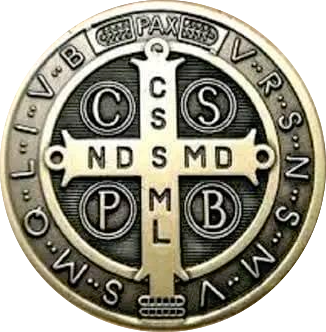

An international organization, consisting of monastic and Oblate communities, following the Rule according to St. Benedict
We are founded on the ancient ideal of Christian life that we have inherited from our spiritual forefathers. Hence our approach is inclusive, and Christians of all faith traditions are welcome to join us as members.
Because our way to spirituality is a positive, uplifting, attitude towards God and neighbor, our community places the strongest emphasis on the development of the human consciousness through the refinement of Christian love towards God’s creation as a whole. Our interaction with other beings (other people and other elements of God’s creation) is the outer indicator of inner spiritual development.
The Gospel truth is not just a body of knowledge but a way of life. We respect and encourage each other on our journey toward the ideal of spiritual formation.
NORTH AMERICA
Our Lady of Sorrows Oblate Chapter is an ecumenical Benedictine community of Oblates and Associates. In true Benedictine tradition, we welcome Christians of all faith traditions to become a part of our family. We teach Benedictine spirituality, while respecting the varying faith traditions of our members.
EUROPE
AUSTRALIA
SOUTH AMERICA
Benedictine Resources
- What is a Benedictine Oblate?
- As in many other religious Orders, there are three branches: The First Order (monks), the Second Order (nuns) and the Third Order (Oblates).
- In our modern times, following the Benedictine principles offers a rich spiritual connection to the stability and wisdom of spiritual life. Originally written for monks, the principles in the Rule of St. Benedict may be applied by anyone embracing Benedictine spirituality while living outside the confines of a monastery, married or single.
- We are invited to balance work with prayer, cultivate interdependence, practice hospitality and apply Benedictine spirituality just as monks and nuns do.
- Saint Benedict suggests a way on which we will be able to let go of our “ego” a bit at a time and become open to the fullness of life. What he recommends to the Abbot of the monastery, for instance, is helpful for us all: Sobriety not only of the stomach but as a basic attitude of mindfulness: To courageously letting go of thoughts, desires and emotions, in order to face our own truth, to accept the reality of ourselves and become compassionate to others.
- Oblates are everyday people with jobs, families and other responsibilities. They can be clergy or laity and come from a variety of Christian faith traditions. Originally, St. Benedict used the term Oblate (from the Latin word oblatus – “one who is offered”) to refer to children who were offered to the monastery by their parents in order to be raised and educated there, presumably to become monastic when of age.
- By their commitment to the Rule of Benedict, modern-day Oblates benefit from an ancient spiritual tradition that has led countless other monastics and Oblates to holiness. Just as candidates for the monastery are tested to see whether they “truly seek God” (RB 58), so are those who seek to become Oblates. They become committed above all else to seek God in Jesus Christ.
- The Benedictine motto ora et labora [pray and work] cooperates with God’s plan to make all things new, to always be in conversation with God through prayer and to value the dignity of work and human activity.

How to join the International Benedictine Community
- After prayerful reflection, Christians and superiors of Benedictine communities (Oblate or monastic) are invited to contact the Oblate Abbot for an admission Application. Individuals may join as new members or, if already an Oblate, request a transfer into an existing Chapter.
- Each monastic community of the IBC has its own standards for formation following the principles of Benedictine spirituality.
- Oblate Chapters are supported by the St. Joseph of Arimathea Skete. Chapter Directors are under the administration of an Abbot. All IBC community members believe in service to the common good, respect for the individual, virtuous friendship, living the Beatitudes (Matthew 5:3-12) and adherence to the following values::
- 1. Conversion of life towards God’s will
- 2. Love of learning
- 3. Listening
- 4. Excellence through virtue
- 5. Hospitality
- 6. Stability
- 7. Stewardship
IBC Administrator
-
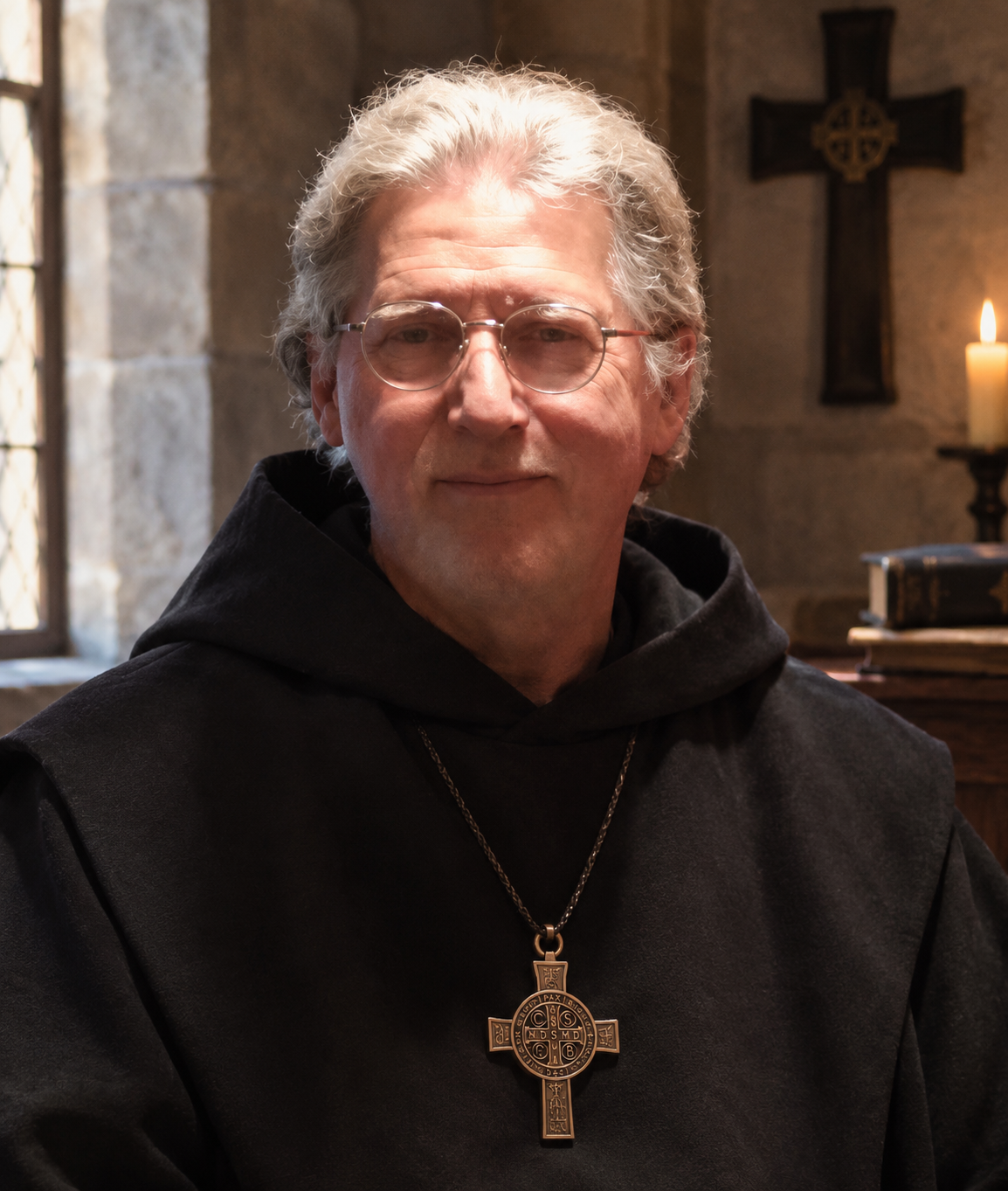
- (Most Rev.) Mar Melchizedek, OSB
- Oblate Director
The Benedictine Vocation
I. Postulancy
- Postulancy is the initial stage of formation for a monastic candidate. This time of formation is determined by each community. The Oblate candidate should consult with the Chapter Director they wish to join for more information.
II. The Novitiate
- This is usually a nine to twelve month period, during which the Novice explores on a deeper level what it means to live as an Oblate. The vocation and suitability of the Novice is further discerned. There is concentration on developing a solid contemplative foundation:
- The Novice commits to following the Rule of St. Benedict.
- The new Novice may receive a ring, lapel pin, bracelet or necklace, which he or she may wear as appropriate and desired.
- The Novice is asked to wear moderate clothing, preferably of darker hue.
- The Novice becomes more fully acquainted with the many facets of Oblate or monastic life, which ever applies.
- Instruction by the Chapter Director is given on the Benedictine Rule, the Liturgical Hours (depending on individual’s faith tradition), spiritual growth and development.
- The Novice continues to internalize and live by the spiritual and religious principles of Oblate life.
Once ready, the Novice then may go on to the next step: The Oblation.
III. Oblation
The Oblate Novice is received as full member of the Chapter. There are two stages: Oblation can be on a yearly renewal basis or be permanent, which is for life. First time Oblation is always for one year.
At Oblation, the new Oblate may be clothed in the Benedictine Habit, if he or she wishes to wear it as desired and appropriate. After permanent Oblation, the Oblate may use the postnomial OSB (Ordo Sancti Benedicti) behind his or her name.
Notable Benedictine Oblates
- St. Thomas Becket, Archbishop of Canterbury and martyr (†1170)
- St. Thomas Aquinas, child Oblate at Monte Cassino (†1274)
- St. Thomas More, lawyer, martyr (†1535)
- St. Oliver Plunkett, Archbishop of Armagh, martyr (†1681)
- Elena Cornaro Piscopia, scholar, philosopher, musician and first woman to receive a Doctorate Degree (†1684)
- Joris-Karl Huysmans, writer (†1907)
- Dorothy Day, social activist (†1980)
- Jacques (†1973) and Raissa (†1960) Maritain, philosophers
- Walker Percy, Southern American novelist (†1990)
- Margaret Rumer Godden, English author (†1998)
- Paul Claudel, French poet and playwright (†1955)
- Sir Alec Guiness, British actor (†2000)
- Rose Kennedy (†1995)
Suggested Books
for the Work of God (Breviary)
The following are Office books recommended by the Skete for use by our Oblates, Novices and Aspirants; or anyone wishing to participate in daily prayer. They cover various faith traditions and are for all levels of experience.
Benedictine Daily Prayer (A Short Breviary)
Benedictine Daily Prayer: A Short Breviary: Maxwell E. Johnson, Editor, with the Monks of Saint John’s Abbey. Leather-like cover with ribbons.
Available from Liturgical Press: ISBN: 9780814628331
Saint Benedict Prayer Book
Though listed as “for beginners”, it is really a good prayer book for all on the Benedictine path.
Available from Amazon: ISBN-13 978-0814624319
Work of God: Benedictine Prayer
For those looking for an everyday grounding in Benedictine spirituality and who wish to pray according to the Benedictine style of Liturgy of the Hours. While written primarily for Benedictine Oblates, this simple yet elegant prayer book also gives the unfamiliar user a starting place from which to progress into a more intense practice.
Available from Amazon: ISBN-13 978-0814624319
The Divine Hours
Edited by Phyllis Tickle., a contemporary Book of Hours in three volumes to guide Christians gently through the daily offices. The Divine Hours is the first major literary and liturgical reworking of the sixth-century Benedictine Rule of fixed-hour prayer. Three volumes (sold individually) or in a smaller, pocket edition.
Prayers for Summertime: available on Amazon. ISBN-13 978-0385504768
Prayers for Autumn and Wintertime: available on Amazon.
ISBN-13 978-0385505406
Prayers for Springtime: available on Amazon. ISBN-13 978-0385505574
The Divine Hours, Pocket Edition: available on Amazon.
ISBN-13 978-0195316933
Christian Prayer: The Liturgy of the Hours (Roman Catholic)
he official one-volume edition of the internationally acclaimed Liturgy of the Hours. This regular edition of Christian Prayer contains the complete texts of Morning and Evening Prayer for the entire year.
Available on Amazon. ISBN-13 978-0899424064
The Lutheran Book of Prayer
Personal prayers are included for almost any life circumstance, including for morning and evening, worship, our world, our neighbors, ourselves and the sick.
Available on Amazon. ISBN-13 978-0758608598
The Book of Common Prayer
This is the standard Book of Common Prayer for the Episcopal Church.
Available on Amazon: ISBN-13 978-0898690613
My Daily Orthodox Prayer Book
Classic Orthodox Prayers for every need with pages of classic Orthodox prayers for every occasion and need, including praying the Daily Hours, establishing a Daily Rule of Prayer, Morning and Evening Prayers and more.
Available on Amazon. ISBN-13 978-1667853178
The Ancient Faith Prayer Book (Orthodox)
Edited by Archimandrite Vassilios Papavassiliou, the Ancient Faith Prayer Book brings together the most ancient and popular prayers of Orthodox Christians in elegant contemporary English and presented in a compact format (4-1/2 X 7 inches) for ease use.
Available on Amazon. ISBN-13 978-1936270903
A Manual of Eastern Orthodox Prayers
Morning and evening prayers, communion prayers, selected Troparia and prayers for various occasions.
Available on Amazon. ISBN-13 978-0881410129
Liturgy of the Hours: An Eastern Breviary
This book contains a shorter form of the Liturgical Hours (Byzantine Rite), including the Typica, Parastas (Panykhida) and additional prayers. It has been formatted to make it more manageable to everyday use outside monastic settings.
Available on Amazon: ISBN-13: 978-1539786344

